News & Insights

Mastering Art Lighting: The Secret to Professional Uniformity

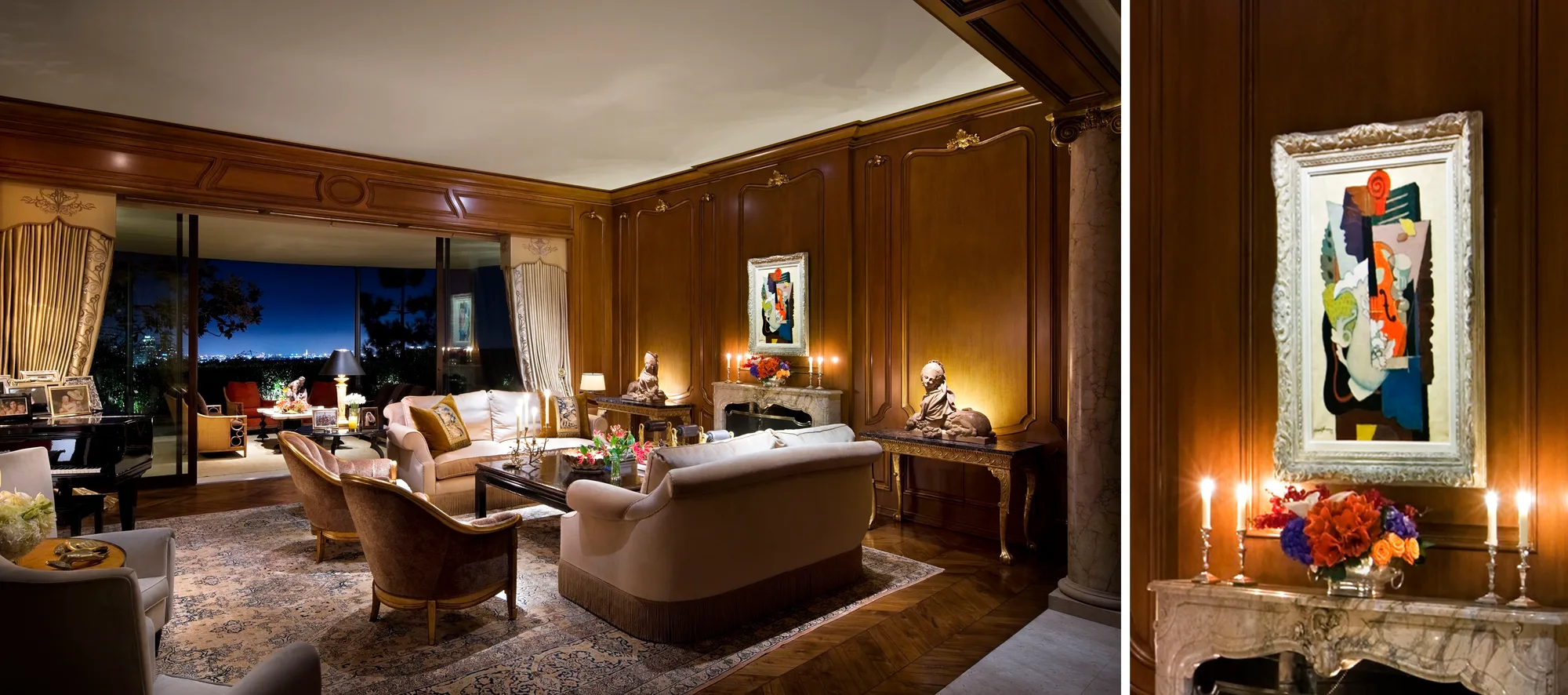
Concealed art lighting framing projector illuminating a framed painting above a fireplace mantel in a luxury wood-paneled living room.

Ever wonder why art in a museum looks so much more “alive” than the pieces in your living room? It usually comes down to one thing: visual uniformity. Uniform light is the unsung hero of a great display. It ensures that the colors at the bottom-left corner of your canvas are just as vibrant as those in the center. Here is how to master the placement and aiming of light to make your collection shine.

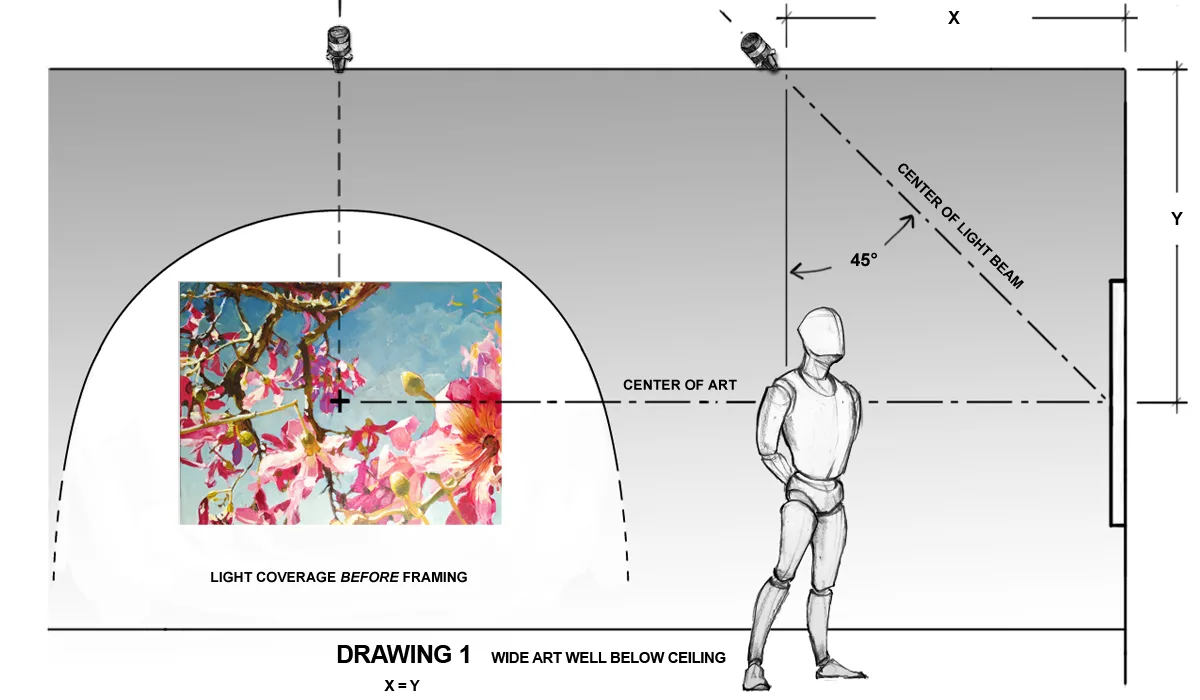
Technical lighting diagram demonstrating a single framing projector casting a wide arc to cover art well below a ceiling.
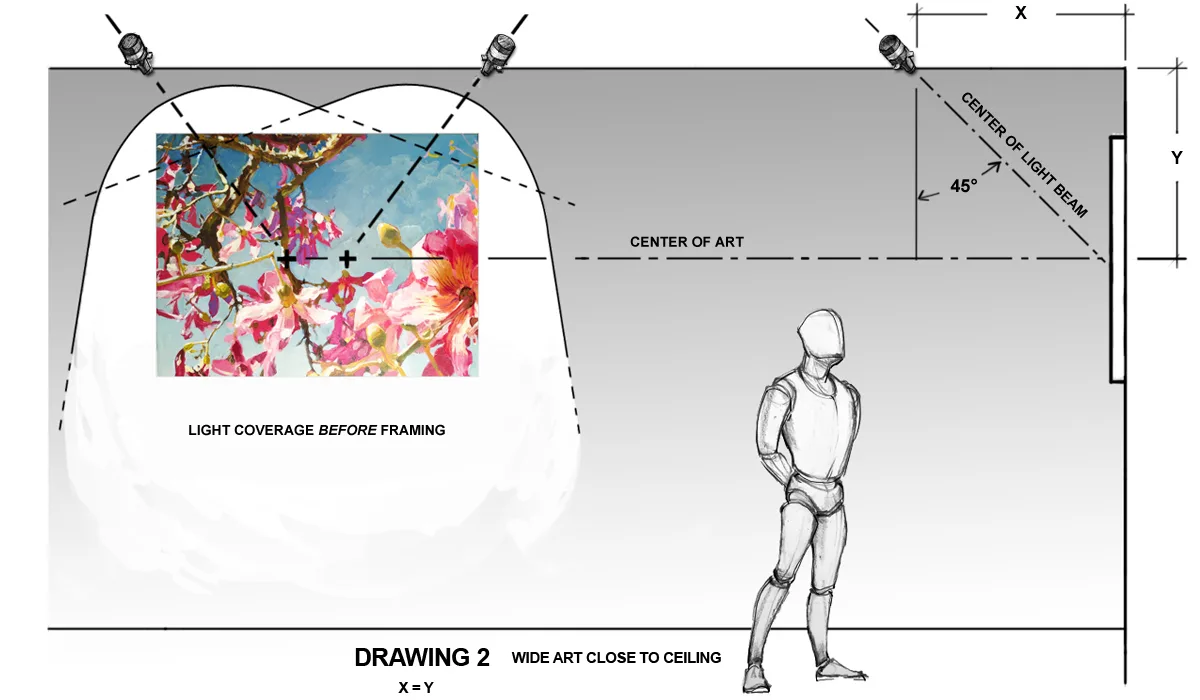
Technical engineering layout showing two framing projectors overlapping light beams to cover wide art close to a ceiling.

The Foundation: Strategic Planning

Visually uniform light is the foundation for a successful art illumination. Completely covering a painting with near uniform light requires fixture position planning. Uniformity can then be enhanced by aiming the projector to the center or below center of art, before framing or shaping light to follow the contour of art. The light beam should be centered on the art while at the same time including an arc of light wide enough to completely cover the top corners of art with light.

Wide art positioned close to a ceiling may require two recessed framing projectors for the arcs to completely cover the top corners with light. Overlapping light using two projectors provides a wider and more uniform lateral light coverage (See Drawing 2 for positioning).

The same wide art positioned well below the ceiling may only require one projector for the arc of light to completely cover the top corners with light (See Drawing 1 for positioning).
The Collection

Uniform light is the unsung hero of a great display.